Restoration
Eureka Nº 7617
Photos by kind permission of the owner.
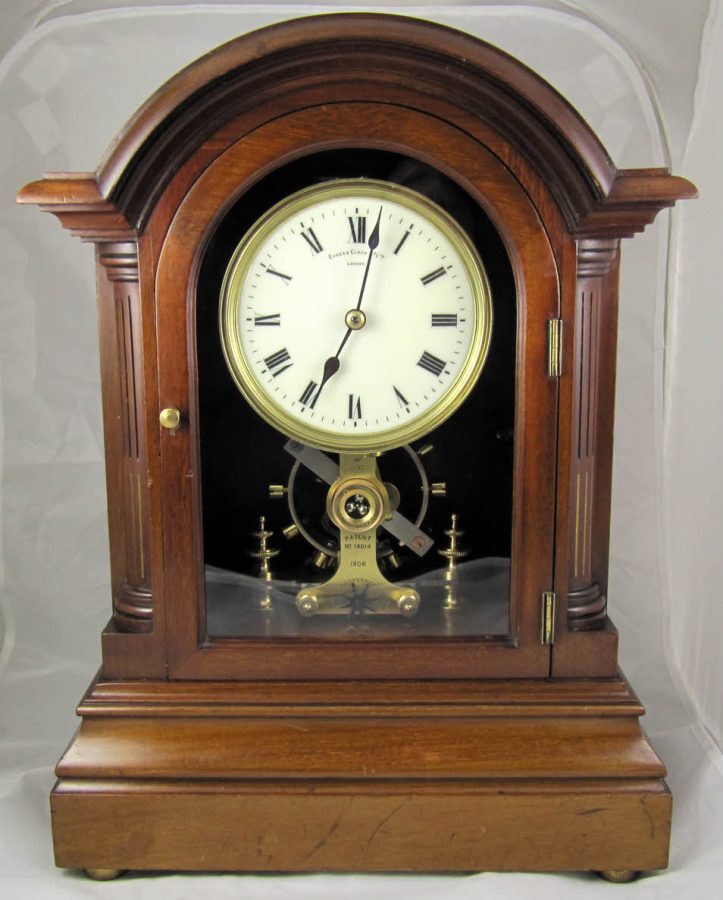
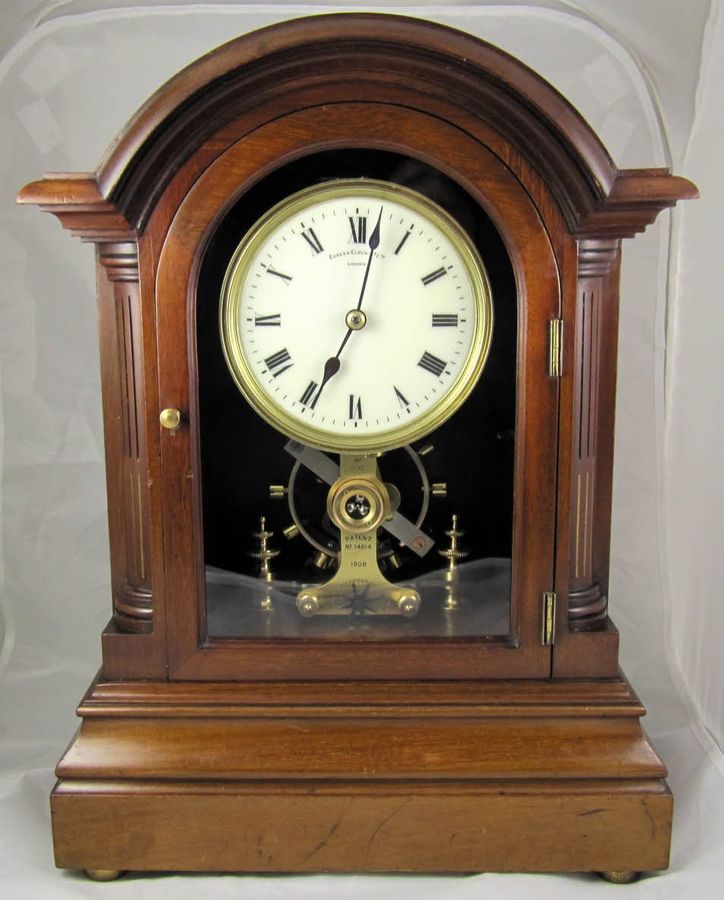
A tall clock in a mahogany break arch “Early English” case with moulded quarter pillars. Enamel dial “Eureka Clock Co Ltd, London”. Three ball movement without second hand. The case has provision for a full flag cell battery at the rear. Initially the clock looks OK with just the minute hand missing. But what are those wires at the back?
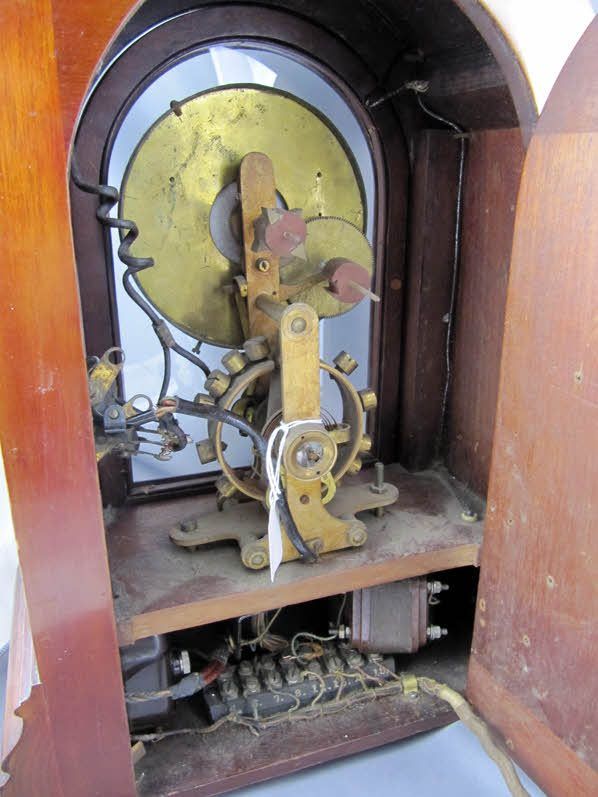
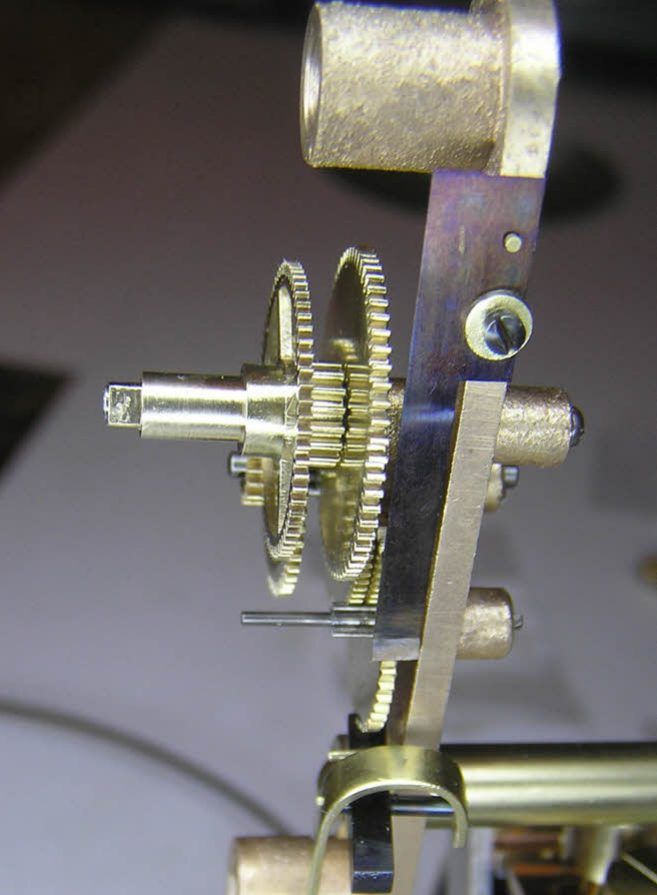
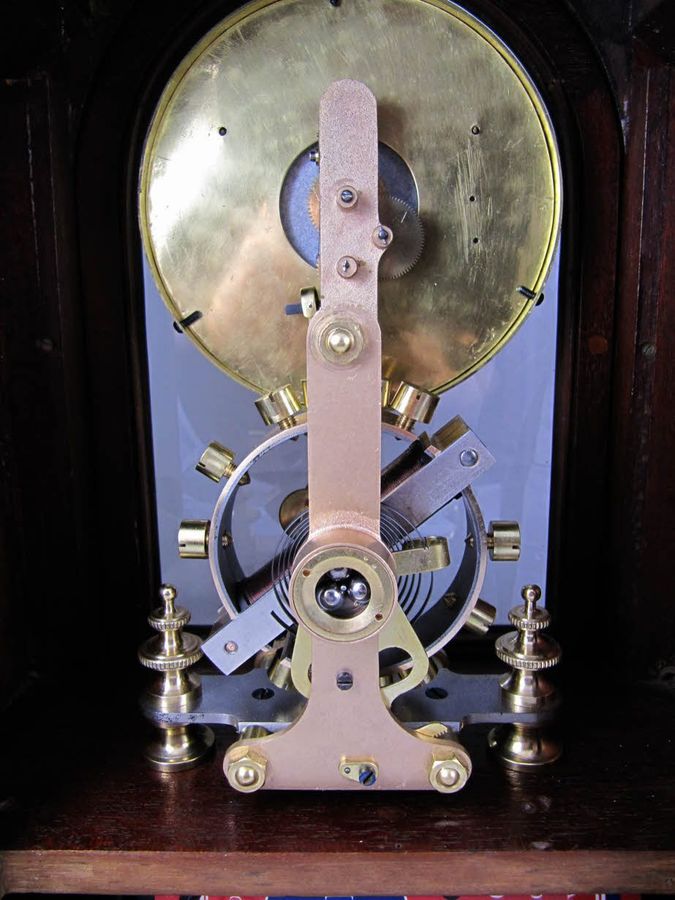
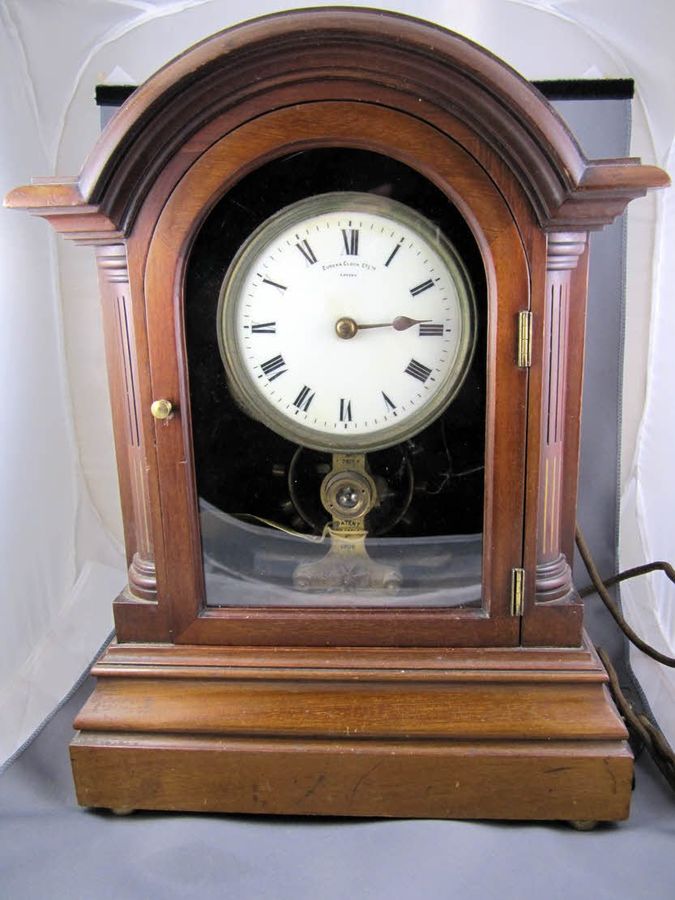
On opening the case it’s obvious that this clock has had some major changes made. But it also seems to have parts missing. Note the missing feet and decorative finials that support and embellish the movement. But its the second photo that shows the really interesting alterations. In place of the battery there appears to be some sort on transformer, screw terminals and perhaps a solenoid. From here lead various wires that terminate in some mechanical contacts that are now disconnected from the movement. These were obviously connected to the extra wheelwork seen at the rear of the clock. From what I can make out the insulated material with the triangular brass protrusions were connected in such a way as to provide impulses at the quarter hours and hours. It naturally follows that this system provided a chiming and striking method that, rather than being mechanical on the clock, was in fact led away from the clock as electrical impulses to drive some other remote device. All of this extra work looks to be from the 1920’s or 30’s and done to a professional standard which suggests that the clock was changed after purchase at some cost.
- Make
- Eureka
- Serial number
- 7617
- Case
- Arch-top case
- Movement
- Tall movement
- Notes
- Restoration notes, 2010
- Full notes
- PDF · 2.4 MB
The complete write-up, with all the photographs, is in the PDF. It can be read on screen, saved or printed.
From the restoration